Showing posts with label professional development. Show all posts

Tuesday, July 10, 2012

Daily Five Chapter Five part 1


Tuesday, July 10, 2012

1. How will you instill the importance (or urgency as the sisters call it) of 'listening to reading' in your students and especially those students who have had little 'lap time' or reading done for them in their own homes?

I think the best way to do this is to make listening to reading super fun and exciting when they listen to me.  I use puppets, I dress up, I jump up and down, act things out and use different voices and I even use sound effects when I read.  When I download a book (which I do when I am on a long car trip) I often listen to snippets before downloading the book to see if the reader can keep my attention.  For those that haven’t had a lot of “lap time” I think it is also important during the first several weeks of school to spend lots of time on the floor reading to kids, modeling what it should look like, sound like and feel like.  I will also be starting a blog with ideas for parents to spice up listening to reading at home and explaining the importance.  I love some of the web sites other bloggers are posting that have actors reading stories (for free!) kids books.  I will be making a list of those to share with parents and to use in my reading nook!

2. What devices or strategies are you going to use to conduct listen to reading?' Will you use a community recording device with one cd and several earphones, individual cd players, tape recorders, ipod-type devices or computers?

I love my iPad for listening to reading.  The kids are enthralled with it and several kiddos can listen at one time.  I am looking to pick up some cheap cd players and tape recorders because I have picked up lots of tapes (cheap) from an on-line yahoo teachers group where you can list items you have for sale and other teachers can list what they are looking for. 

3. What expectations will you have for your students during 'listen to reading' and how will you keep them on task and independent instead of needing your assistance when they can't manage 'devices?'

My expectations are for them to actually listen to what is being read.  This means quiet voices, listening ears, watching eyes.  I will keep them on track by modeling how to listen to reading on the Smart Board as a large group by going to an on-line reading resource and having everyone practice together.  We will make an anchor chart and model it doing it correctly and incorrectly.  Practice, practice, practice.  I love the set of posters on the blog A Differentiated Kindergarten http://www.differentiatedkindergarten.com/2012/07/kindergaten-daily-5-link-up-and.html  so I will be downloading those and using them as well!  Thanks for making those!

4. Do you have enough 'listening to reading' type materials? If not, what ideas do you have for securing these materials? Where will you store them? How will your students retrieve these items? Where will they be used (will there be a designated spot in your class for listen or reading or will it be their choice)?

No, I do not have enough material, but I am stalking garage sales, thrift stores, on-line resources (like the one I mentioned above) and friends and families to get more tapes and CD’s to go with books for listening to reading.  I also have subscribed to several apps that have free books, interactive books and add new books each week.  I have a special place with a special book shelf, a beach umbrella and beach chairs for the kids to listen to reading.  I can’t wait to set it up.  They can listen anywhere in the classroom, but I am hoping this becomes a special place for them.  As long as supplies return to the shelf they are allowed to go where they are comfortable. 

6. The sisters do not really talk about this in their book, but how do you feel about listening response sheets? Will listening to reading be just for 'listening' or will there be follow-up work required of your students? If there is reading response sheets, what will they look like?

I think taking data on what the kiddos are getting out of their listening to reading experience is important, but I do it on a bi-weekly basis and do not have the kiddos fill out a sheet each time they listen to reading.  I hope to see the kids re-enacting stories they listen to during their center time play, but I need formal assessment so I know if the books they are listening to are interesting and challenging for them.  I have a feeling as the year progresses I will add more assessment to the listening to reading section of our Daily Five routine.

7. I would be remiss to not add this so . . . how can this station be differentiated to meet the various learning profiles, interests and/or readiness of your students?

I love my iPad for differentiating for children at different levels.  Some books can be interactive for my kinesthetic learners; some books can be shorter for my kiddos with shorter attention spans, longer for kids that are ready for that.  I love that I can get books that light up or highlight the words as they are read for my visual learners or the ones that have cool sound effects for my auditory learners.  I can also download books that focus on a certain topic so the kids that are into dinosaurs can read about dinosaurs on so on.  It is cheaper to download a lot of these books than it is for me to buy them from a store many times.

Tuesday, July 3, 2012

Daily Five Chapter Four Book Study


Link to Daily Five Chapter Four Book Study at Mrs Miner's Kindergarten Monkey Business
Read to Self is a segment of the Daily 5 framework when students need to be reading quietly and constantly for a set amount of time in the classroom.

1)  How far into the school year do you think kinders need to be to be able to begin the process of Read to Self? What is realistic? When do you plan to begin implementation

I will start probably the first day.  I am planning on taking a book in myself and reading when they do at first.  I am going to send home a note with the parents at Kindergarten Orientation explaining Read To Self and I will ask the parents to introduce the term at home and to practice with their child for two minutes each night until Kindergarten starts.  I think it is important for the parents to understand the importance so they can practice at home and have the concept reinforced and practiced when they are not at school.

2)  How will you make sure that each child views him/herself as a reader (whether they are reading words or not)?

Oh my!  They are readers!  I believe that before they even come to school and they will hear it at Orientation.  I will be giving them book marks that say “I AM A SUPER READER!”.  I will have lots of environmental print in the Dramatic Play area to reinforce that they are already reading!  I will also have many “favorite” books that they can “read” to me and to their friends.


3)  What are some ideas you have about "Launching Read to Self" in kindergarten? How will you go about it and what are some ways to make sure it is "kinder friendly"?

I have a ton of stuffed animals that are characters from many of the popular books (I Love Kohl’s for doing this).  They can get an animal to sit with them when they read at first.  I know this is more of a read to a friend strategy, but at first I think it will make reading to self less intimidating.  I also have mentioned their All About Me book they put together to bring to school during the first week of school.  It is great because they can all read about themselves!  I have a special book case they go into so they can always pick their special book about themselves to read.  It is critical that they are given an opportunity to be successful right from the start, and that book they bring from home really seems to help.  We will also discuss reading to self during morning meeting starting the first day.  I have tons of pillows, kids size beach chairs, a beach umbrella they can sit under, I have cut off two rocking chairs and made them kids size so they can have lots of different areas of the room they want to explore with a book!  I want them to snuggle down with a book and really enjoy the atmosphere.

4)  How will you/do you build the children's belief that this IS important? What can we do to encourage the ones who do not value it and create disruptions for others?

Again, I think it is about making them successful.  No one wants to fail, and letting them read the All About Me book they bring with them creates success.  I have also been collecting a lot of non-fiction books (lots of boys really love these, real pictures of real tangible things can really entice some kids to enjoy books because they don’t have to follow a “story” but can understand reading about “real” things is reading and RESEARCH.  My aren’t they smart to be doing all that already!).  I always ask the kids the first day of school what they want to learn about and then it is my job to get books specifically about their interest.  The kids can’t believe that I would go to the library and pick out books special, just for them.  I also write it down for them to take to the library (both school and public) so they can had it to the media specialist (some are shy and don’t want to talk).  I make special book marks for them featuring their interests so they don’t forget what they want to read about (I might put pictures of dinosaurs, princesses, animals, whatever they list onto the bookmark).

5)      How valuable is Checking In and Reviewing with kindergarteners? How often will you do it? When will you do it? What are some different ways to "check in"?

I want to have a morning meeting and an afternoon meeting to check in with the class.  I will check in with small groups and individuals at different times during the day.  This is something I have never done formally (remember, Daily Five is new to me) so this is an area I need to introduce to myself this year.  I am looking forward to seeing what everyone else has to say about this.

Saturday, June 30, 2012

In Pictures and In Words Book Study Chapter Severn

Link to Book Study In Pictures and In Words Chapter Seven
I can’t rave enough about how much I have learned from this book study.  I love reading what is in the book, but even more I love reading what everyone else has to say.  Thank you all for sharing.  I have noticed that some people are sharing books for each technique and that is really branching out my “library” of books to use this year so I will do the same.

Onto the techniques:

1.     Crafting with Distance Perspective – “Distance perspective is something children can easily try in their own illustrating.”  Use words like PANORAMA, CLOSE-UP, ZOOM, and PERSPECTIVE. 


Eggbert the Slightly Cracked Egg - From School Library Journal

PreSchool-Grade 2-The other eggs in the refrigerator admire Eggbert's remarkable paintings-until they discover that he has a slight crack. Because of his defect, he is banished from his home. At first he uses his artistic talent to attempt to camouflage himself, but his disguises are quickly discovered. Then he realizes that the world contains many lovely cracks. Brush in hand, he travels the globe and produces wonderful paintings of fissures found in things such as volcanoes and the Liberty Bell. Back at the refrigerator, his former friends ponder his hand-painted postcards with amazement and a touch of sadness. The story might be read as a commentary on the lives of artists and/or the dangers and blessings of nonconformity; however, young readers will be more engaged by the illustrations than by philosophical reflections. Eggs and vegetables rarely assume such lifelike expressions and stances, and the simple text and clear design add up to read-aloud potential. Eggbert is an egg worth watching.
Kathy Piehl, Mankato State University, MN

I wish I could have shown more pictures from inside.  The perspective in these illustrations is wonderful!  From inside the refrigerator to him painting volcanoes you get to see the world both small and large!  If you go to Amazon you can see some of the illustrations, but I highly recommend you go to the library and check out the book yourself.  My copy is in storage or else I would have taken pictures for you.  I still felt it was worth talking about in this section without having all of the pictures to show you.  Sorry!

2.                    Crafting with Positioning Perspective – “Illustrations have positioning perspective; a central image may be pictured from the front, the back, the side, above, or below.  The illustrator is in charge of how the reader sees the scene.  He or she decides what to picture in the picture, and also where the reader will be positioned to the view that picture.”  Use words like:  ANGLE, FRONT, BACK, SIDE, ABOVE, BELOW.


We all know this is one of my favorite books for perspective!  David Wiesner does a fantastic job taking the reader INTO the story in his illustrations.  Another must check out book for teaching this technique and many of the others in Chapter 7.


3.                    Crafting the Background – “The central image in an illustration may have lots of background behind it, just a little, or hardly any at all”.

This is a very powerful book I use during Dr. Martin Luther King’s Birthday on my unit of peace, slavery and tolerance.  Yes, I am the teacher that got permission to show ROOTS and staged a school wide March against Drugs and Violence in an inner city school complete with the DARE officer dressed as Dr. King.  We read I Have A Dream and sang peace protest songs.  This is a powerful book that takes kids into a world of a young girl that picks cotton with her family.  The pictures, the background take you there and set a mode that shows how early in the day her work starts.  You must look into this book.


4.                    Showing Two Sides of a Physical Space – “An illustration may show two sides of a physical space simultaneously: inside and outside, above and below”.

Okay, nothing is coming to mind for me on this one so I would love some suggestions!


5.                    Using Scenes to Show Different Actions – “Small, separate scenes show different actions.”


I love this set of books.  The children love them too.  We usually make soup during this unit (great way to get them to eat vegetables).  I liked the way the illustrator used scenes to show different actions (see carrot above) and I had never noticed that before doing this book study.  I really missed a lot by not reading this book earlier!


6.                   Using Scenes to Capture the Passage of Time - “Small, separate scenes can capture what happens over time”. 

Again, my books are in storage so I can’t show you inside of this book, but we used this in December, this version and the kids fell in love.  They did reader’s theater with it too.  Inside it has a great page that shows the little old lady and little old man, using scenes, making the gingerbread boy.  The children would act it out in dramatic play.  I will be using this again this winter but I will concentrate on making this part of their writing as well!


7.    Using Scenes to Show Movement Through Different Places- “Small separate scenes can show movement through different places.

I am weak here and need some suggestions!


8.    Using Scenes as a List – “Small, separate scenes may work like a list, showing lots of different detail but unconnected by any background”. 

I am weak here and need some suggestions!


9.    Showing, Not Telling -  “The text tells something general, the illustrations (often a series of small, separate scenes) show something very specific.”


I love this story for comparing and contrasting against the traditional Three Little Pigs.  And I am a drama nerd so I love to act it out too!  The illustrations in this kill me too.  There is a picture of the mixing bowl the wolf is using to make a birthday cake for his grandmother.  If you look closely at the illustration you see bunny ears in the mix.  This really tells the reader that he is making a very WOLFISH birthday cake and helps the reader understand that this is not the typical birthday cake we think of when we read the words BIRTHDAY CAKE.  The illustrations really show us what the wolf is not telling us in the picture!  The illustrations are critical though out the book in helping the reader understand what the character is not telling us in word.


10.  Crafting a “Backstory” – “Illustrations may have characters and/or action that are never mentioned in the words.

The Little House in the Prairie Books are great for this!  The kids in my class, after reading several of these books, wanted to turn the dramatic play area into a cabin.  This had so much to do with the illustrations and the backstory they created.  We had plastic fruits and veggies hanging over the kitchen area like they were illustrated in the books.  I had to say no to hanging meat (like in the attic for winter storage in the books) when the kids suggested that!  We did make corn husk dolls and needle point and quilts.  All things they saw in the illustrations in these books.  Very powerful!


11.  Manipulating Point of View for Effect – “The content of an illustration may directly contradict what the words say, usually for humorous effect.”

I am not sure this book really contradicts what the words say, but the illustrations do a great job manipulating point of view for effect.  I love the farmer standing outside of the barn listening after you just saw what the animals were doing inside the barn. 


12.  Seeing Through the Eyes of a Narrator – “Illustrations may show the perspective of the narrator, so we actually see things through his or her eyes.”

There is a great picture in this book when the little boy hears the doorbell ring and he looks through the peep hole and you see exactly what he sees, the little bit of the pirates beard and mouth.  It is awesome and you really feel like you are looking through that peep hole!


Phew, this was a long post to do but it was really helpful to me.  I am sorry I didn’t have my books available to give more detailed pictures but I hope some of the books I recommended will be helpful!  I can’t wait to read everyone’s posts!  Feel free to follow me and I will follow you so I can see what you say in the next part of this book study!

Tuesday, June 26, 2012

Daily 5 Book Study Chapter 3


1.     Establish a gathering place for brain and body breaks. (Do you call your gathering place anything special? 

I never really called it anything special.  I used the one carpet we had in the room for so many different things I never thought about giving it a name.  I will think about that now for this upcoming school year though.  I can’t wait to see what some other people call it.

2.    Developing the concept of "good fit" books. 

I can see this is where I have more to learn than to offer anyone.  I have worked with Pre-K for the past 5 years and before that special education Resource Room so I never had a group of kiddos that could read or read at approximately the same level (as a Resource Room teacher I had kiddos K-6th).  I have been thinking a lot about finding good fit books and I have been searching garage sales and on-line teacher sites grabbing up everything I can!

3.     Create anchor charts with students How will these be visual in the room? Where will you store them? What about small spaces?  
 Funny thing about this.  I train adults in early childhood and as an adult trainer I used anchor charts, I just didn’t know that they were called that.  I am struggling trying to figure out how to display these in the room this year.  My mentor teacher keeps them all together on an easel as she creates them so she can refer back to them all year.  The kids can go through and find the one they need.  I like that idea, but I would like to have them in a really big stable book type things.  Maybe I will take cardboard and fashion my own book that is free standing to store them in so the kids can always have access to them.  As an adult trainer I used a lot of books about Mind Mapping and Visual Thinking.  As soon as I read this Chapter I knew I had to dig them out.  I highly recommend anyone using anchor charts get these.  They will also help the children in visually capturing their thoughts before they can write.  I am also doing the In Pictures and In Words book study and will be sharing this there as well.  Do check out these books.  I really think you will love them.  I need to practice drawing with these again.  They make it so easy!


4.    Short, repeated intervals of independent practice and setting up book boxes (How are you going to keep track of stamina? What will you use for book boxes? What are you going to put in those book boxes on the 1st day of school?)

  I am frankly going to steal all of the good ideas that are being posted by you wonderful people to set up my book boxes.  I have several old book shelves that I am painting black and I bought tons of plastic bins at the dollar stores to use to separate my books and activities for each of the Daily 5 stations.  What am I going to put in these boxes the first day of school?  Lots of alphabet stuff to see which kiddos recognize the letters and can make the sounds.  I will have tons of books on tape/CD to listen to for them as well.  Keeping track of stamina will be tricky at first, but I love the idea of the class setting a goal and keeping a timer on the Smart Board so they can see how long they have gone.  There is a Smart Board program I believe that has a runner on it showing how long they have read.  I am still stalking blogs and pinterest boards looking for more ideas.


5.    Calm Signals and check in procedures (Do you already have a signal? How will you handle check ins?) 
I have always done a song (such as, come on over, come on over, come on over, it’s time for morning meeting……………..I need to see your eyes……….it’s time to come to the carpet).  I love the idea of a wind chime or some other musical instrument to use as a signal.  I am searching garage sales now to find the perfect thing!


6.    Using the correct model/incorrect model approach for demonstrating appropriate behaviors. (Will you keep track of inappropriate behaviors? If they are not doing what is expected, then they are calling out for attention...what other ways can you give them some extra atention so that they can be more independent during D5?) 
 I really don’t like to give a lot of attention to negative behavior.  I love the role playing of positive and negative behaviors as a class.  I am a big believer of giving children sensory input to help them with wiggly bodies.  I don’t mind gum chewing for my more oral kiddos (I know, I am weird).  I keep lots of fidget toys for large group time.  I put smelly stuff into my play dough to keep more than one sense engaged at a time.  I let them write in glitter pens, I let them pick the music to have on in the background (usually they can pick from a composer we have studied or a genre we have explored).  I just think the more senses that can be engaged during an activity the less likely negative behaviors will occur.  I also schedule a sitting activity immediately followed by a whole body activity.  Sometimes I think we set the behaviors off by forgetting how long they can actually attend to a single activity.  Really, if I had to sit all day long and listen to someone talk at me I would act out too!  Now you know why I teach young children.  I am so much like them!

Well that is it for me.  I hope you will follow my blog so I can find you.  I can't wait to read what everyone has to say about this chapter.  And again, special thanks to Live, Love, Laugh Everyday in Kindergarten for hosting this awesome study!  You Rock!

Saturday, June 23, 2012

In Pictures and In Words first six chapters book study

Go to this link at Mrs. Willis Kindergarten to join the book study!
http://www.mrswillskindergarten.com/

My Thoughts on the First Six Chapters:

How might you explain to students that illustrating is composing?
I think children know that they tell stories though their pictures.  Just ask any kiddo who has drawn something that you can’t make heads or tails of and they can tell you all about it.  And if you every guess what it is WRONG, watch out because they will look at you like you are the dumbest grown up ever for not being able to see what they see in their drawing.  Teaching them to add words to their drawings is just the next natural step in their love of “drawing”. 
How might your attitude towards writing affect your students’ willingness to write?
While reading the first six chapters I was struck by how the author related her apprehensions about writing to children’s apprehension about writing.  I know I have wanted to write a book, but have always been stopped by my fear of the blank page, of how to organize my thoughts and how to choose the right words.  I forgot that children feel the same way.  If I am apprehensive about writing/spelling (I am not the best speller in the world) then I must be subconsciously relaying that attitude to the children.  Maybe this year during writing workshop I will work on writing my book.  That might be a great way to work on my stamina and encourage the children and lead by example.
How might you help students build stamina in their writing?
I believe encouraging children to work on illustrations will help build their stamina.  Children are inherently drawn to drawing, even the youngest children I have worked with.  Also, I am building my library of books of great illustrators, and I know this will help children have more focus when writing/illustrating.  It is easier to write for longer when you have a focus.  Most of us learn through copying someone else's style.  Having the opportunity to practice lots of different styles helps the child develop their own.  It kind of goes back to the “blank page” syndrome.  Having something to model from gives a direction and direction leads to longer time spent on a project.  This builds stamina and having many new styles to explore leads to the children developing their own style of illustrating and writing.
What language might you use with your students talk about reading like a writer, both as a writer of words and pictures?
I am not sure about what language to use (thus one of the reasons I wanted to join this book study).  I do know I am starting to study the illustrator’s and research their blogs and websites.  I want the children to be able to do this type of research as well.  I think a lot of rich language and vocabulary expansion will come out of this study.

Name several books (not previously mentioned in this text) you would gather for your classroom’s units of study on illustration.
My boyfriend’s son is a librarian in Richmond Virginia.  He was telling me about this great book with an awesome illustrator. 


From School Library Journal

Starred Review. Kindergarten-Grade 4–A wave deposits an old-fashioned contraption at the feet of an inquisitive young beachcomber. Its a Melville underwater camera, and the excited boy quickly develops the film he finds inside. The photos are amazing: a windup fish, with intricate gears and screwed-on panels, appears in a school with its living counterparts; a fully inflated puffer, outfitted as a hot-air balloon, sails above the water; miniature green aliens kowtow to dour-faced sea horses; and more. The last print depicts a girl, holding a photo of a boy, and so on. As the images become smaller, the protagonist views them through his magnifying glass and then his microscope. The chain of children continues back through time, ending with a sepia image of a turn-of-the-20th-century boy waving from a beach. After photographing himself holding the print, the youngster tosses the camera back into the ocean, where it makes its way to its next recipient. This wordless books vivid watercolor paintings have a crisp realism that anchors the elements of fantasy. Shifting perspectives, from close-ups to landscape views, and a layout incorporating broad spreads and boxed sequences, add drama and motion to the storytelling and echo the photographic theme. Filled with inventive details and delightful twists, each snapshot is a tale waiting to be told. Pair this visual adventure with Wiesners other works, Chris Van Allsburgs titles, or Barbara Lehmans The Red Book (Houghton, 2004) for a mind-bending journey of imagination.–Joy Fleishhacker, School Library Journal
Copyright © Reed Business Information, a division of Reed Elsevier Inc. All rights reserved.

The illustrator is David Wiesner and this is the link to his website. 

This is the link to the website about his book Flotsam. 

I will be using this illustrator as our first illustrator study this fall.  I am beginning the year with an ocean theme and this book will go a long way toward introducing different ways of illustrating a story.  Just look at these illustrations!  After reading the first six chapters of In Pictures and In Words  I became so excited to look at this book again.  I started looking at all of my books in my children's library in a different way.  Let me share some of the illustrations with you.

So many great tiles.  Love how the story is illustrated in sections.  I never would have noticed this if I hadn't joined this book study!

Look at the eyeball.  What great perspective!


Look at the point of view on this picture!  It makes me feel like I am actually in the ocean looking up into the sky!

The book and the illustrations will lead us into using a camera to document the school (I will be teaching Kindergarten this fall so they have lots of places around the school to discover).  Hopefully this will help them become better observers by focusing on the school through the eyes of the camera lens and it will also show me how they see the world around them.  I have done this before and you can go to this link to see how my Pre-K kids used a camera to document the world around them.
A Winter Walk  here are a few pictures from that post that the children took with the camera on the walk.  They later used the pictures in a class book and to reference when doing journal writing!


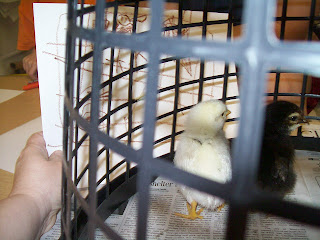
Here is a link to another blog post that shows the kiddos drawing/illustrating from real life when we hatched chicks!

Talk about stamina!  These three to five year old students spent up to fourty minutes drawing the chickens!  We did this on multiple days and made a class book  out of the drawings.

This shows children at different stages of writing.  I had a three to five mixed age mixed ability classroom.  I love this picture!

This child is starting to use letters to record thoughts.

Showing off their drawing to the subjects!


I really enjoyed the first part of the book study and I am really looking forward to the rest of it!